|
| Programa general | Teatro Degollado |
Sunday 30
Closure of the May Cultural Festival under the
II meeting of rectors UNIVERSIA.
UNAM philharmonic Orchestra (Mexico)
Alun Francis, artistic director
Leonardo Villeda, tenor
Time: 12:30 hrs.
Venue: Teatro Degollado
*Free admission. Full
Program:
Himno Nacional
Ricardo Castro Intermezzo de Atzimba 5'
Mario Ruiz Armengol-Márquez Danzas cubanas 11'
Viejos recuerdos - Gracias a Dios - Canta clave canta- Lamento criollo - Ayer y hoy
Belisario de Jesús García Morir por tu amor 3'50''
María Grever Cuando vuelva a tu lado 4'
Alfonso Esparza Oteo Dime que si 4'
María Grever Te quiero, dijiste 2' 35''
María Grever Júrame 4'
Intermedio
Silvestre Revueltas La noche de los mayas 26'
Arturo Márquez Danzón N°2 11'
Orquesta Filarmónica de la UNAM
UNAM Philharmonic Orchestra
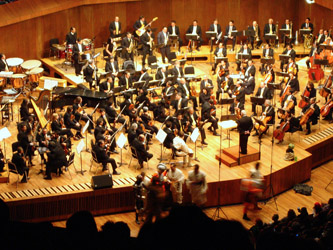
The Orquesta Filarmónica de la UNAM (OFUNAM), is the oldest symphonic group in the cultural landscape of Mexico City, and is one of the most important factors of the most transcendent cultural projects in the country, the UNAM.
 |
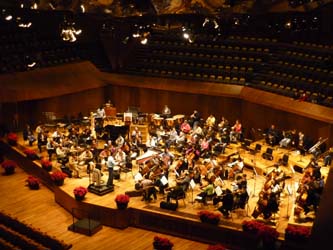 |
During its more than seventy years of activities, the OFUNAM has transformed itself into one of the best orchestras in Mexico. Its popularity is due to the quality of the whole group. Its head conductors, the participation of guest conductors and national and international prestigious soloists, as well as its interesting and varied production, the enthusiasm of its members and the beauty, comfort and wonderful acoustics of its home, the Sala Netzahualcoyotl.
In addition to the concerts offered at Sala Netzahualcoyotl, every season the OFUNAM takes tours through different UNAM schools and faculties. Its programming is traditionally distinctive for its interest in responding with quality, diversity and balance to the cultural needs of Mexican society, and particularly, to those of the university community. Consequently, its repertoire covers all styles, from baroque to contemporary music, and of course including music from Mexican composers. In this field, a double CD album is particularly important: Música sinfónica Mexicana, recorded at the OFUNAM, covering almost 60 years of Mexican musical composition.
Though the ensemble started in 1929 immediately after the just obtained autonomy for the University, the orchestra started with a group of music teachers and students who formed a group of what then was the Music Faculty of the UNAM; formally they started in 1936 once the project was approved by the Lázaro Cárdenas government. Originally it was called Orquesta Sinfónica de la Universidad and was conducted jointly by José F. Vasquez and José Rocabruna, and their headquarters were established at the el Anfiteatro Simón Bolívar, of the Escuela Nacional Preparatoria.
Icilio Bredo was in charge of the artistic direction of the newly formed orchestra from 1962 to 1966, and moved to the Auditorio Justo Sierra, of the Facultad de Filosofía y Letras at the Ciudad Universitaria. Eduardo Mata became its artistic director in 1966, thus starting a new and brilliant stage of development for this orchestra which lasted for nine years. During this period it changed into Orquesta Filarmónica de la UNAM, name and character which it still keeps. Héctor Quintanar became its head director in 1975.
The orchestra moved to its present location, Sala Netzahualcoyotl in 1976. Between 1981 and 1984, two associated head conductors took charge or the artistic work of the ensemble: Enrique Diemecke and Eduardo Diazmuñoz. Between 1985 and 1989, its artistic conductor was Jorge Velazco. From 1989 to 1993, Jesus Medina took this charge. Ronald Zollman came after him, from 1994 to 2002. Zuohuang Chen was musical conductor from 2002 to 2006. In 2007, Alun Francis was named artistic conductor and in 2008, Rodrigo Macías obtained the position of assistant conductor after winning a competition.
Alun Francis, conductor
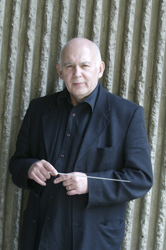 ALUN FRANCIS is currently Principal Conductor and Artistic Director of the 'Orquesta Filarmónica de la UNAM' (OFUNAM) in Mexico City. He has previously held positions as Chief or Principal Conductor and Artistic Director of the Berliner Symphoniker, Orchestra Sinfonica di Milano, Haydn Orchestra Bolzano/Trento, Nordwestdeutsche Philharmonie, Opera Forum in The Netherlands, Northwest Chamber Orchestra in Seattle, Thüringen Philharmonic Orchestra plus the Ulster Orchestra and Northern Ireland Opera Trust and he continues to be one of the leading conductors working in Europe today with recent engagements including the Köln Radio Symphony Orchestra, Radio-Philharmonie Hannover des NDR, Berlin Radio Symphony Orchestra and Duisburg Symphony Orchestra. In the past forty years he has conducted more than two hundred different orchestras and opera companies in more than thirty countries and has appeared regularly in the major musical capitals of the world: Berlin, Vienna, Amsterdam, London and Milan. Alun Francis has recorded more than eighty CDs which in recent years have included concerts and recordings with the Italian Radio Orchestra (RAI) Turin, Kölner Rundfunk-Sinfonie Orchester, Deutsches Symphonie-Orchester Berlin, Rundfunk Sinfonie Orchester of Berlin, the Frankfurter-Radio-Sinfonie Orchester, Norddeutscher Rundfunk (NDR) Hannover, Rundfunk-Sinfonieorchester Saarbrücken, Radio Sinfonie Orchester Basel, Royal Stockholm Philharmonic Orchestra, Swedish National Radio Orchestra, Rotterdam Philharmonic, Florida Philharmonic Orchestra, Hallé Orchestra and the BBC Symphony Orchestra, London. ALUN FRANCIS is currently Principal Conductor and Artistic Director of the 'Orquesta Filarmónica de la UNAM' (OFUNAM) in Mexico City. He has previously held positions as Chief or Principal Conductor and Artistic Director of the Berliner Symphoniker, Orchestra Sinfonica di Milano, Haydn Orchestra Bolzano/Trento, Nordwestdeutsche Philharmonie, Opera Forum in The Netherlands, Northwest Chamber Orchestra in Seattle, Thüringen Philharmonic Orchestra plus the Ulster Orchestra and Northern Ireland Opera Trust and he continues to be one of the leading conductors working in Europe today with recent engagements including the Köln Radio Symphony Orchestra, Radio-Philharmonie Hannover des NDR, Berlin Radio Symphony Orchestra and Duisburg Symphony Orchestra. In the past forty years he has conducted more than two hundred different orchestras and opera companies in more than thirty countries and has appeared regularly in the major musical capitals of the world: Berlin, Vienna, Amsterdam, London and Milan. Alun Francis has recorded more than eighty CDs which in recent years have included concerts and recordings with the Italian Radio Orchestra (RAI) Turin, Kölner Rundfunk-Sinfonie Orchester, Deutsches Symphonie-Orchester Berlin, Rundfunk Sinfonie Orchester of Berlin, the Frankfurter-Radio-Sinfonie Orchester, Norddeutscher Rundfunk (NDR) Hannover, Rundfunk-Sinfonieorchester Saarbrücken, Radio Sinfonie Orchester Basel, Royal Stockholm Philharmonic Orchestra, Swedish National Radio Orchestra, Rotterdam Philharmonic, Florida Philharmonic Orchestra, Hallé Orchestra and the BBC Symphony Orchestra, London.
Alun Francis won First Prize in the category of CD Premiers at Cannes´ Classical Awards presented during MIDEM in January 2000 for his recordings of the complete symphonies of Darius Milhaud. Highly regarded as a conductor of Bel Canto opera, Alun Francis was invited to direct the world premiere of Donizetti´s "Gabriella di Vergy" in London in 1978. At the Bavarian State Opera in Munich, Alun Francis directed "Rigoletto" in Roman Polanski's production. His Opera repertoire includes over 70 operas. Outside the core classical repertoire, Alun Francis is also a noted specialist in 20th century music in repertoire which ranges from Berio and Stockhausen and a sizeable number of world premiers to his name. As a composer, Alun Francis has written works for the concert hall, theatre and films, which are published in London and New York.
Program notes
Silvestre Revueltas
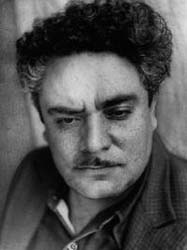 (Santiago Papasquiaro, México, 1899-Ciudad de México, 1940). He was a composer, violinist and orchestra conductor who had a brief but intense life. His musical formation as a violinist and orchestra conductor was received in his birthplace and in the United States, and he started to compose somewhat late, in his thirties, probably influenced by Carlos Chávez of whom he was assistant conductor between 1929 and 1935 in the Orquesta sinfónica de México. He traveled to Spain in 1937 and took an active part in the civil war in favor of the Republican band. Self-taught composer, his works are scarce but valuable, with titles as El renacuajo paseador, The promenading tadpole, (1933) and his orchestra compositions Ocho for the radio (1933), Redes (1935), Homenaje a Federico García Lorca, Homage to García Lorca, (1935) and La Noche de los Mayas, The Night of the Mayans, (1939). Sensemayá, The Snake, (1938), is his best known composition, well known both in Mexico and abroad. A very deep knowledge of the Mexican music and the dominance of rhythm grant Revueltas’ music a unique attractiveness. On returning to Mexico he lived an isolated life and died in complete poverty and abandonment. Revueltas and Carlos Chávez are probably the best known Mexican composers of the XX Century. (Santiago Papasquiaro, México, 1899-Ciudad de México, 1940). He was a composer, violinist and orchestra conductor who had a brief but intense life. His musical formation as a violinist and orchestra conductor was received in his birthplace and in the United States, and he started to compose somewhat late, in his thirties, probably influenced by Carlos Chávez of whom he was assistant conductor between 1929 and 1935 in the Orquesta sinfónica de México. He traveled to Spain in 1937 and took an active part in the civil war in favor of the Republican band. Self-taught composer, his works are scarce but valuable, with titles as El renacuajo paseador, The promenading tadpole, (1933) and his orchestra compositions Ocho for the radio (1933), Redes (1935), Homenaje a Federico García Lorca, Homage to García Lorca, (1935) and La Noche de los Mayas, The Night of the Mayans, (1939). Sensemayá, The Snake, (1938), is his best known composition, well known both in Mexico and abroad. A very deep knowledge of the Mexican music and the dominance of rhythm grant Revueltas’ music a unique attractiveness. On returning to Mexico he lived an isolated life and died in complete poverty and abandonment. Revueltas and Carlos Chávez are probably the best known Mexican composers of the XX Century.
| Programa general | Teatro Degollado |
|