
 |
||||
  |
||||
 |
||||
 |
||||
 |
||||
 |
||||
 |
||||
 |
||||
 |
||||

|
||||
Síguenos en
|
||||


 |
 |
 |
 |
 |
 |
|
| Programa general | MAZ |
Thursday 20 Admission free Venue: MAZ/ Museo de Arte de Zapopan Program Tres piezas de salón para guitarra (Anónimos del S. XIX) Cinco canciones infantiles (textos: Garcia Lorca) Silvestre Revueltas Arrulladora Manuel M. Ponce Intermedio Malgré tout Manuel M. Ponce Te quiero dijiste María Grever Madrigal Ventura Romero (1913-1994) Granada Agustín Lara (1897-1970) Sergio Medina
In 1982 he received a scholarship by the government of France to perfect his music studies at L’École Normale de Musique in Paris, where he obtained the “Diplôme d’Execution de la Guitare” directed by Master Alberto Ponce, with whom he studied for six years. While he was in France, he also specialized in Renaissance and Baroque Music at the Conservatoire Nationale de Musique de Raincy with Professor Javier Hinojosa, and in 1987 he was granted the “Diplôme Superieur de Musique Ancienne”. He has taken perfecting courses given by renowned teachers such as Manuel Berrueco, Leo Brouwer, David Russel and Hopkinson Smith. He has worked intensely for contemporary music, close to many composers, particularly with Mauricio Ohana. In 1996 he premiered the Concert for Guitar and Orchestra by the Mexican Composer Víctor Manuel Medeles. He has toured several times, and given concerts in several countries, like France, Germany, Spain, Italy, Denmark, the United States and the Mexican Republic. He has recorded three CDs: “Guitarra Latinoamericana”, “Guitarra Poética” and “Con Alma Latina”. Presently he works both as a professor and researcher for the Department of Music of the Universidad de Guadalajara. Solanye Caignet Lima, mezzosoprano
As an interpreter of violin, she has played in many concerts with several orchestras, chamber music groups and as a soloist. She was four hears with the Orquesta Sinfónica de Aguascalientes. As a singer she has appeared in many cities of the Republic of Mexico, as well as in Cuba. She finished her Bachelor in singing in 2001 and since then, she has intervened as soloist with choral groups, orchestras, recitals, opera, operetta and popular music. As a singer, since 1994, she has interpreted important roles in several of Donizetti, G. Rossini, W.A. Mozart, Poulenc, Bizet and other composer’s operas. Mexico’s Centro Nacional de las Artes gave an operatic perfecting course in 1999, with the main professors at the Metropolitan Opera House as tutors, and Miss Caignet was an outstanding student. She has appeared as recitalist regularly since 1999, accompanied by the Mexican guitar player Sergio Medina, with whom she has toured the most important concert halls in all of Mexico. She teaches singing at the Music School of the Universidad Autónoma d Zacatecas, and will present her thesis for a Master in Philosophy and History of Ideas, having studied with the eminent Spanish Medieval History Teacher María José Sánchez Usón. Program notes Silvestre Revueltas, composer
| Top | Manuel M. Ponce, composer
When Ponce entered the National Music Conservatory, he already had a certain prestige as composer and pianist. He remained there until 1903. In 1904 he went to Italy and could be accepted at the Liceo de Bolonia to take superior music studies there. He studied in Germany between 1906 and 1908 then returning to Mexico to take charge of the piano and History of Music classes. He wrote one composition for the left hand honoring the one-handed sculptor Jesús F. Contreras, which he titled "Malgré tout" (A pesar de todo) In 1912 he wrote his masterpiece, “Estrellita”, not exactly a love song but living nostalgic feelings, a complaint for youth ebbing away. On that same year he gave at the Teatro Nacional the memorable Popular Mexican Music concerto that scandalized the ardent defenders or European traditions, but constituted a fundamental landmark in the history of national songs. With this valuable promotional activity for the music of his country, and with melodies like “Estrellita" (Little Star), “A la orilla de un palmar" (By the Palm Grove), "Alevántate" (Wake up), "La Pajarera" (Bird-selling Woman), "Marchita el alma" (Withered Soul) and many more, Ponce won the honorific title of “Creator of the Modern Mexican Song”. He also was the first Mexican composer who projected his music abroad: "Estrellita", for example, has been part of the repertoire of the main orchestras all over the world and of innumerable singers, though frequently those who interpret it know neither the origins of the song nor the author’s name. His body rests at the Rotonda de los Hombres Ilustres in the Dolores Cemetery, Mexico City. There is a recognition plaque on the back of the Exedra column, by the fountain devoted to this poet and musician. | Top | María Grever, composer
Her father was Spanish and her mother Mexican, and when she was 6 years old, she went to live to Seville, her father’s birthplace. She studied music in France, among others, with Claude Debussy. In 1916 she met Leon A. Grever in New York, whom she married. She started working for Paramount and 20th Century Fox, and made scores for several films. She got her first great success when José Mojica, a famous Mexican tenor, sings her remarkable song “Júrame”. In 1953, Libertad Lamarque appeared in the role of Mrs. Grever in “Cuando me Vaya”, a biographic film directed by the Chilean Tito Davison. María Grever lived and died in New York. She requested to be buried in Mexico City, where she had gotten some years before a Medalla al Mérito Civil. Agustín Lara, composer
Since he was a child, he had a talent to play fashionable melodies and improvise musical fragments. When he was 13 he had the opportunity and lack of money that made him look for a job as a piano player at a dubious and quite hot “Ladies Club”. He obtained his first income there, facing from that early age the strong drama of real life. Doctor Lara had not been in Mexico for some time, but when he returned, he found his son in an activity which unchained his fury and secluded him at the Colegio Militar where he would be severely disciplined. Agustín was there for a year, but he failed and Dr. Lara sent him to do physically heavy work to Durango. Mrs. Lara begged and begged for her son’s release, and finally he returned to the Colegio Militar. In 1927, free at last of the military discipline, he could return to music and he found a job in a cabaret in Santa María la Redonda where, a woman wounded him in the face in a bout of jealousy. At this time, radio broadcasts began to be popular, and on September 18, 1930, a new ambitious radio station was born, and included Agustín Lara in its programs interpreting his own songs with his very personal style and voice which quickly became popular. The name of the program was ‘La Hora Íntima de Agustín Lara’ and he launched one or two of his songs in every program. It would be difficult to list all the successful songs of this prolific composer, which add up to several hundreds. His song Granada has been interpreted by famous singers all over the world. He got married for the first time to Carmen Zozaya in 1939, but linked sentimentally to María Félix, Clarita Martínez, Yolanda Gazca, Vianey Lárraga and Rocio Durán, whom he married in Spain in 1965. He had no children and adopted Vianey’s son, who was christened as Agustín, with the surnames of Lara Lárraga. He died at the ABC Cowdray British Hospital in Mexico on November 6, 1970, and he lied in state at his wake at the Teatro de la Sociedad de Autores y Compositores de Música, from where his body was taken to the Palacio de Bellas Artes, to finally be buried in the Rotonda de los Hombre Ilustres at the Panteón de Dolores. Ventura Romero, composer
Being an uncomplicated man, his first composition was “La Burrita”. Among the compositions which have pleased him the most, there are “La Burrita”, because it was his first one, and “Un Madrigal”, but he is also pleased with “Senderito de Amor”, "Tu Castigo", "Soy Infeliz", "El Gavilán Pollero" and several others. His inspiration has brought him several recognitions, among them, a medal received in 1948 for “La Burrita”. In 1987, the Calendario Azteca de Oro for "Un Madrigal”, and in the same year, he received a Diploma from the Sociedad de Autores y Compositores de Música (SACM), for the merits of his music. In the town where he was born, San Buenaventura, there is a street honoring him. Among his anecdotes, on one occasion he was acting at a night club in Ciudad Juárez and just about to finish his interpretations, he played and sang "Peregrina" by Ricardo Palmerín. When he was to sing: "Peregrina de semblante encantador", he said: "Peregrina de Ricardo Palmerín", but that was not his only mistake, since at that moment he completely forgot the lyrics. People began to laugh and he had to apologize, but at the same time he realized that the audience was favorably impressed, so he thanked them. The greatest satisfaction he has had in his career is that the common people interpret his songs, both in Mexico and abroad. He formed the fist trio, “Los Ases”. He lived many years in Mexico City, where he socialized with radio and cinema celebrities. He died in 1994. As a permanent homage to his work, many distinguished people from Chihuahua created the group "Amigos de Ventura Romero".
| Programa general | MAZ | |
 He studied music at the Escuela de Música de la Universidad de Guadalajara with Fernando Corona andEnrique Flórez, becoming a “Music Instructor “en donde obtuvo los títulos de “Instructor de Música” y el de “Profesor en la Enseñanza de la Guitarra”. Actualmente cuenta con los grados de Licenciatura y Maestría por la misma Universidad.
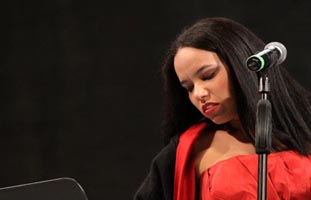 Mexican by naturalization, she was born in La Habana, Cuba in 1976, and started her music studies when she was a seven-year old girl at the Conservatorio Manuel Saumell, and later she took two years of viola with the great Russian teacher Viera Borisova at the Escuela Nacional de Arte (ENA). She moved to Zacatecas, Mexico, in 1992 where she undertook singing and violin, finishing her studies with a Degree in singing with the well known Cuban teacher Ninon Lima.
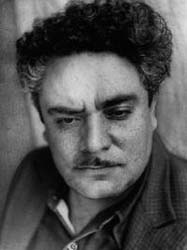 (Santiago Papasquiaro, México, 1899-Ciudad de México, 1940). He was a composer, violinist and orchestra conductor who had a brief but intense life. His musical formation as a violinist and orchestra conductor was received in his birthplace and in the United States, and he started to compose somewhat late, in his thirties, probably influenced by Carlos Chávez of whom he was assistant conductor between 1929 and 1935 in the Orquesta sinfónica de México. He traveled to Spain in 1937 and took an active part in the civil war in favor of the Republican band. Self-taught composer, his works are scarce but valuable, with titles as El renacuajo paseador, The promenading tadpole, (1933) and his orchestra compositions Ocho for the radio (1933), Redes (1935), Homenaje a Federico García Lorca, Homage to García Lorca, (1935) and La Noche de los Mayas, The Night of the Mayans, (1939). Sensemayá, The Snake, (1938), is his best known composition, well known both in Mexico and abroad. A very deep knowledge of the Mexican music and the dominance of rhythm grant Revueltas’ music a unique attractiveness. On returning to Mexico he lived an isolated life and died in complete poverty and abandonment. Revueltas and Carlos Chávez are probably the best known Mexican composers of the XX Century.
 He was born in Zacatecas in 1882, and, according to his biographers, he was famous for being “a musical phenomenon”. He was less than four years old when, after carefully listening to the piano lessons his sister Josephine received, he sat himself in front of the instrument and immediately interpreted one of the pieces he had heard. His parents set up piano and solfegge lessons for him. During his first years, Manuel’s compositions were gavottes, waltzes and other similarly inspired melodies. But on growing up, the sad tunes with some happiness traits or the happy ones touched with sadness that he heard, would make Ponce integrate a concept intuited from his teenage years: that popular Mexican music, if refined and methodized without discarding its original essence, would not only become something quite dignified and valuable, but it would also have great possibilities of being accepted all over the world.
 Her single name was María Joaquina de la Portilla Torres, and she lived from 1884 to 1951. She was a Mexican composer of concert music, music for films and of more than 800 popular songs, mostly boleros. She also conducted orchestras. Her birthplace is not certain: some historians say that she was born in León, Guanajuato; others say that she is native of Unión de San Antonio in Jalisco, but others say that she was born on board a ship during one of her mother’s trips to Spain.
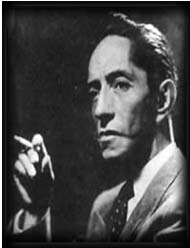 Agustín Lara Aguirre del Pino was born in Mexico City on October 30, 1900. His parents were Joaquín Lara and María Aguirre del Pino. He grew up in Tlacotalpan, Veracruz, where his two brothers were born. The family had to return to Mexico City, and settled in Coyoacán, helped by Refugio Aguirre del Pino, the elder sister of Agustín’s mother, who was director of the orphan asylum where the composer first knew the harmonium used there. Doctor Lara was always opposed to his son´s liking for music; he was an extreme disciplinarian and made his son suffer for his natural talent
 He was born on the 2nd of May, 1913 in San Buenaventura, Chihuahua. His parents were Paz Romero Salaíses and Adela Armendáriz Carrasco. He lived at Buenaventura until he was 17 years old, then three years in the capital of Chihuahua and in Mexico City for more than sixty years. He studied Elementary and High School at San Buenaventura. He entered the Conservatorio Nacional de Música, to continue his studies later at the Escuela Superior Nocturna de Música. He worked as a music teacher, and started his career as composer in Mexico City in 1948.